ICAR-National Institute of Abiotic Stress Management, Baramati organized a community outreach and support programme under the Development Action Plan for Scheduled Castes (DAPSC) 2025–26 to support marginalized families and promote inclusive development.
As part of the initiative, a detailed survey of 150 Scheduled Caste families from the Rahate Toli area of Nagpur was conducted with the help of BARTI to understand their socio-economic conditions and identify their basic household needs. Based on the survey findings, the institute arranged the distribution of home utensil kits and essential household items to the selected beneficiaries.
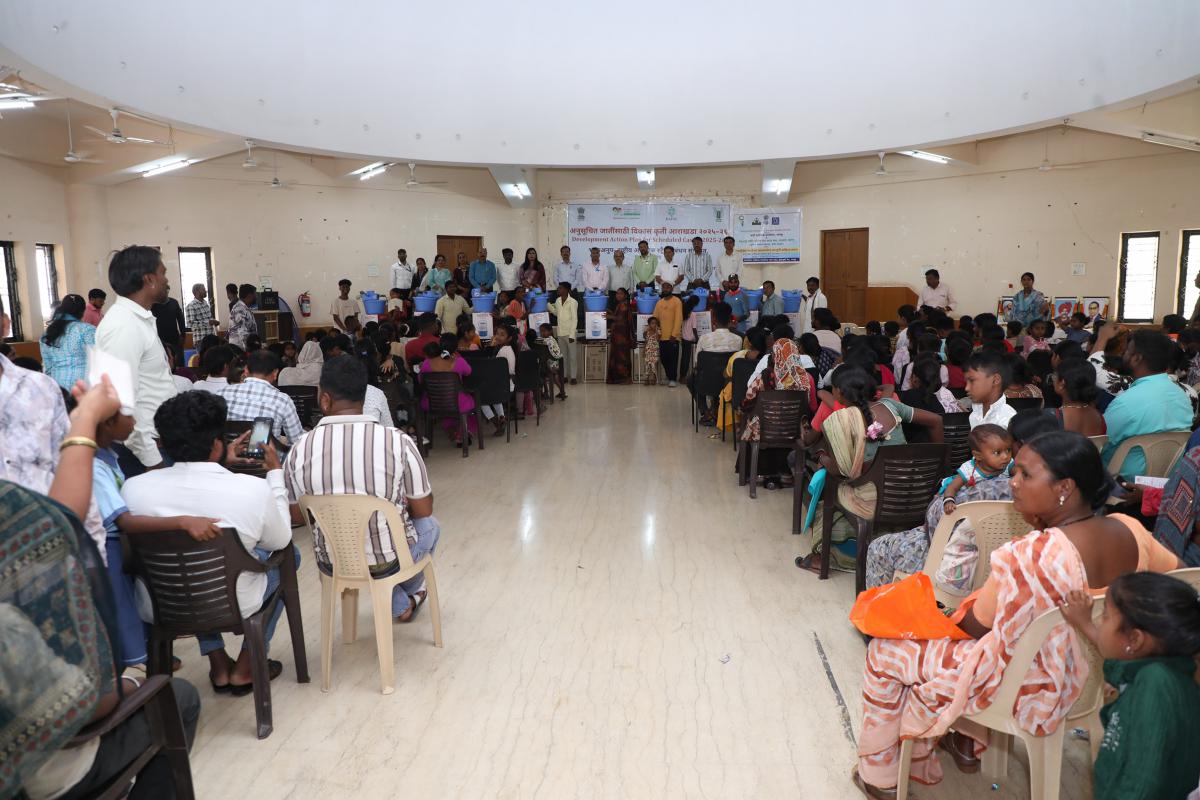
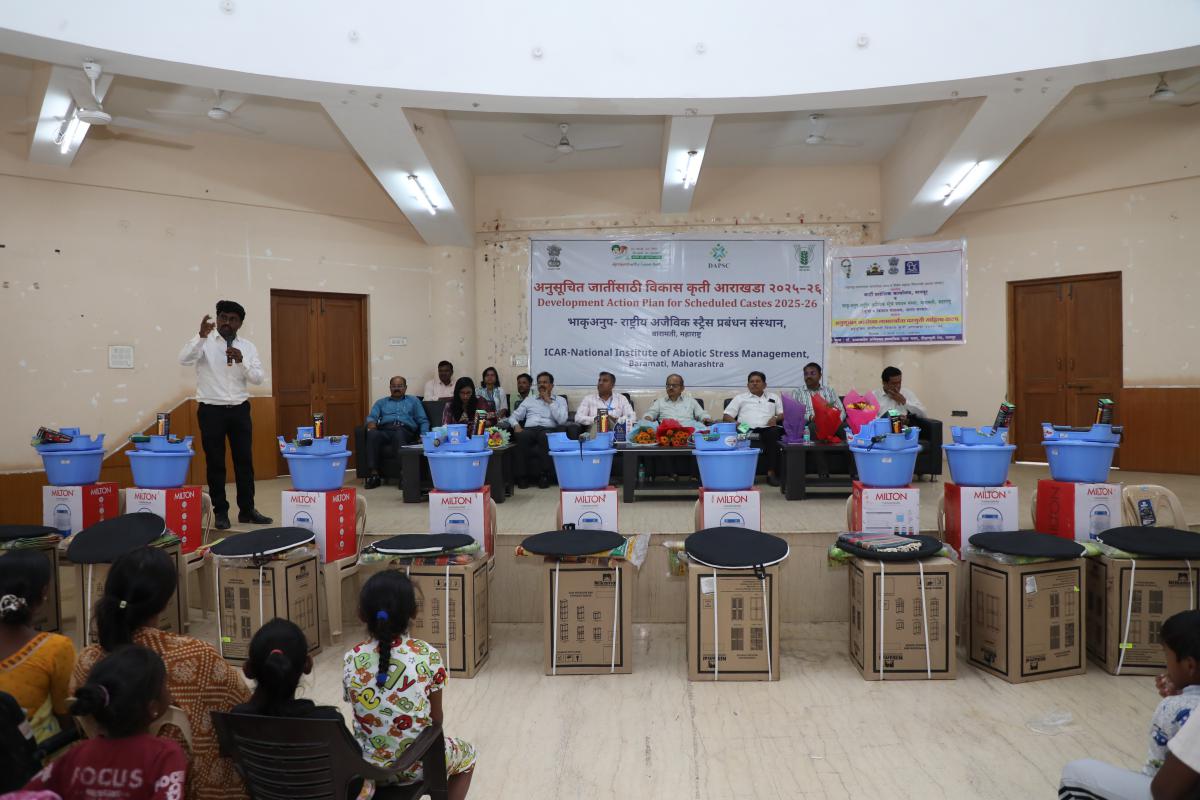
The distribution programme was organized on 6 March 2026 in Nagpur and was attended by 150 beneficiaries along with their family members. The event was graced by Nitin P. Kurade, Principal Scientist and Chairman (DAPSC), and Mukesh Bhendarkar, Scientist, ICAR-NIASM. Other dignitaries present included Surendra Pawar, Executive Director, Dr. Babasaheb Ambedkar Equality (Samta), Nagpur; Sukeshini Telgote, Assistant Commissioner, Social Welfare, Nagpur; and Anil Valke, Assistant Project Manager, Dr. Babasaheb Ambedkar Research and Training Institute (BARTI).
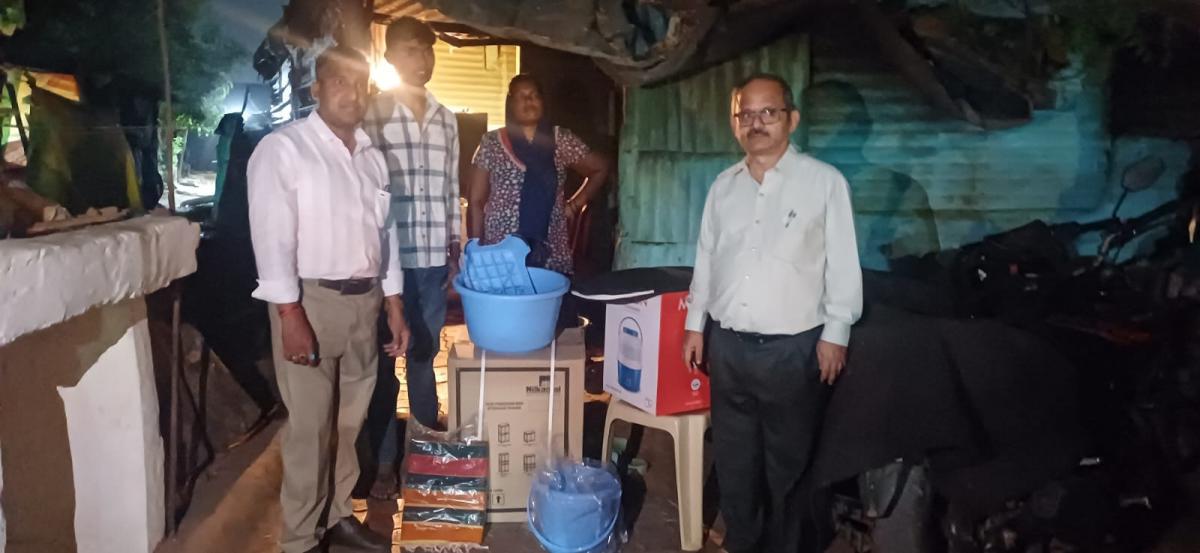
During the programme, Dr. Mukesh Bhendarkar explained the objectives and implementation process of the DAPSC initiative and highlighted the institute’s efforts to support socially and economically vulnerable communities. Dr. N. P. Kurade briefed the gathering about the institute’s research activities and outreach programmes implemented in different parts of Maharashtra, as well as various research initiatives being carried out at the institute. A total of 150 home utensil kits were distributed to the selected beneficiaries during the event. The team also visited the residential locality of the beneficiaries in Nagpur and handed over assistance to a few families directly at their doorsteps.
The initiative was highly appreciated by representatives from BARTI and the Social Welfare Department, who acknowledged the efforts of ICAR-NIASM in extending support to economically weaker Scheduled Caste families. A total of 398 participants attended the programme, including 150 DAPSC beneficiaries, with a significant representation of women (243 participants), along with their family members.
The programme was coordinated by Dr. Nitin P. Kurade and Dr. Mukesh Bhendarkar from ICAR-NIASM.