ICAR-Sponsored Winter School on ‘Recent Advances in Abiotic Stress Management for Enhancing Productivity, Quality and Farmers’ Income’ Inaugurated at ICAR–NIASM, Baramati
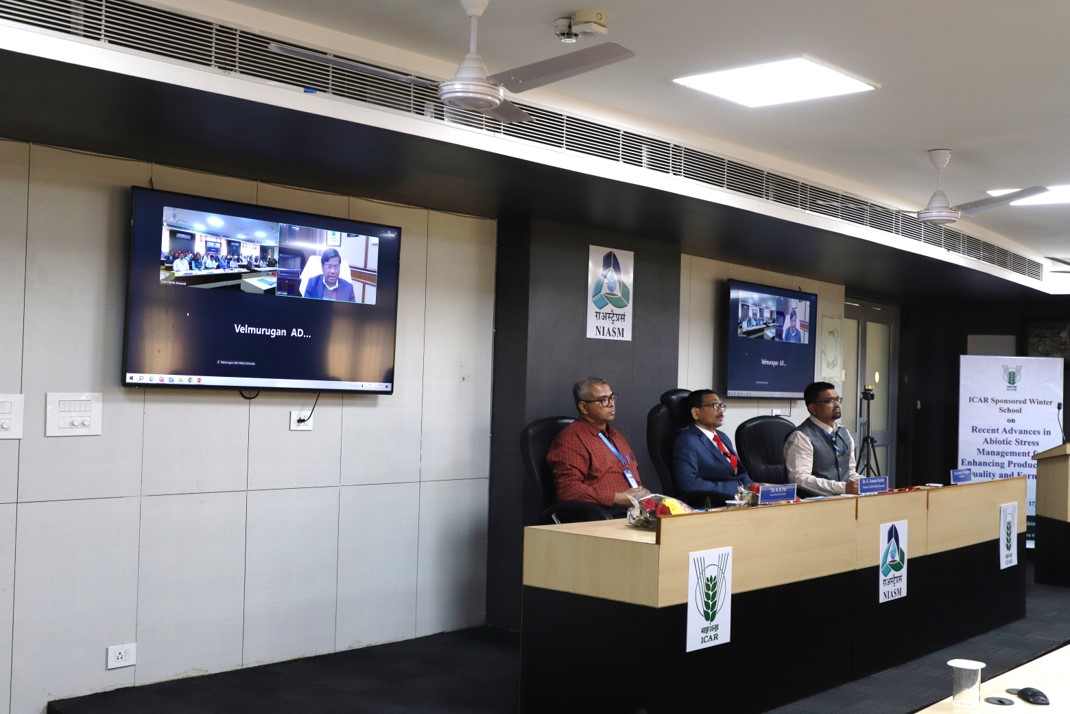
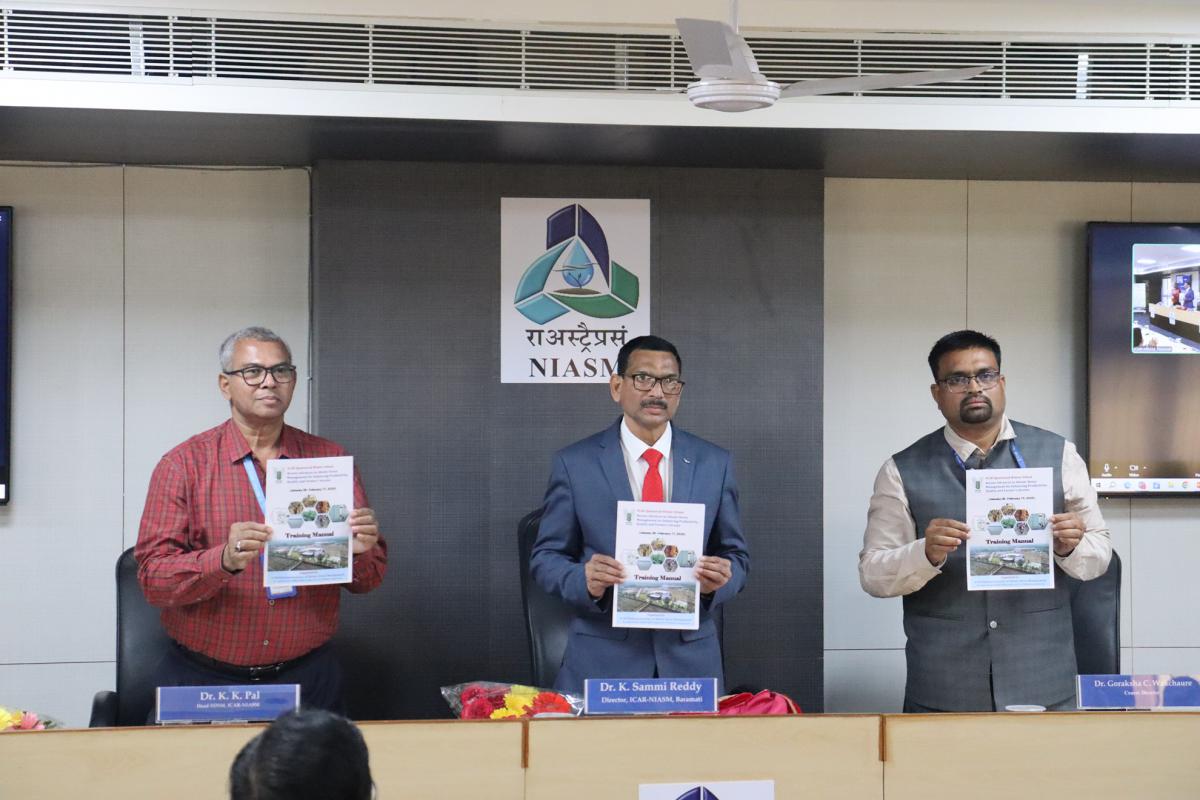
A 21-day ICAR-sponsored Winter School on “Recent Advances in Abiotic Stress Management for Enhancing Productivity, Quality and Farmers’ Income” (28 January–17 February 2026) was inaugurated on Wednesday, 28 January 2026, at the ICAR–National Institute of Abiotic Stress Management (ICAR–NIASM), Baramati.
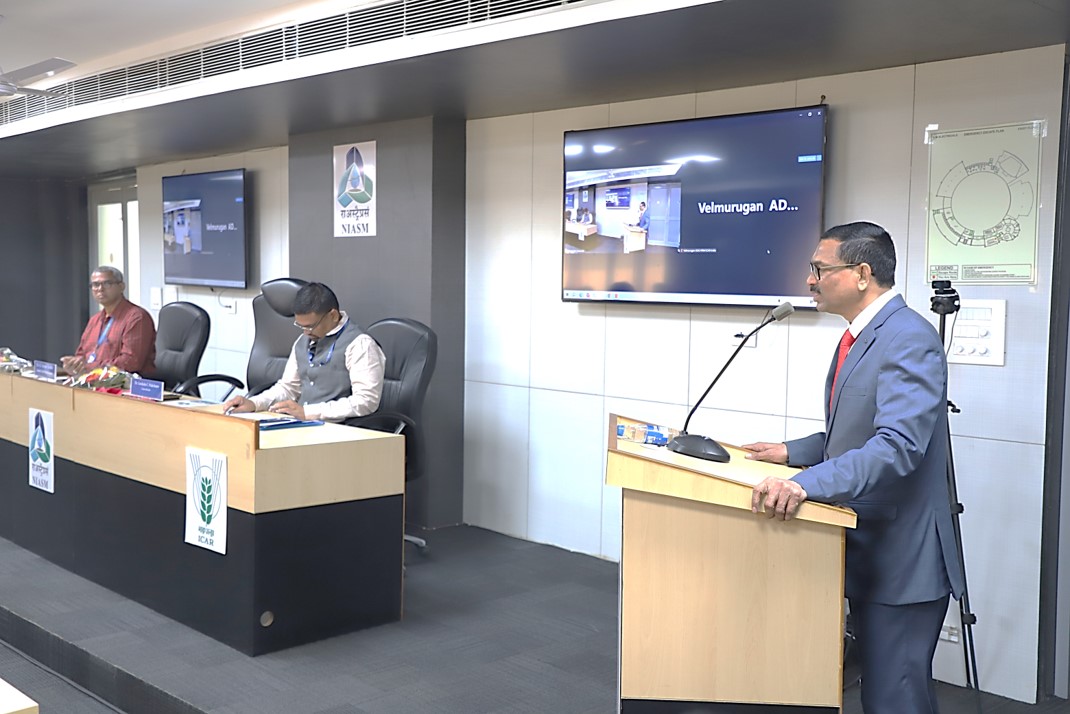
The inaugural session was graced by Dr A. K. Nayak, Hon’ble Deputy Director General (NRM), ICAR, New Delhi, as the Chief Guest, and Dr A. Velmurugan, Assistant Director General (SWM), ICAR, as the Guest of Honour. In his inaugural address, Dr Nayak emphasised the critical need to advance the science of vulnerability assessment, skill development, and characterisation of abiotic stresses through comprehensive discussions and deliberations. He strongly advocated the adoption of high-throughput assessment methods to precisely quantify yield losses caused by abiotic stresses such as drought, heat, and salinity, underscoring their importance in developing targeted management strategies. He further highlighted that the development of effective abiotic stress management technologies is fundamental to enhancing agricultural productivity and production, thereby improving crop quality and farmers’ income under climate variability.
Dr A. Velmurugan, ADG (SWM), in his address, emphasised the integration of cutting-edge research, technological innovations, and field-level interventions for effective quantification, planning, and management of abiotic stresses to enhance farmers’ profitability.
Dr K. Sammi Reddy, Director, ICAR–NIASM, highlighted the vital role of the institute and underscored the importance of cross-learning among scientists, researchers, and stakeholders to address complex abiotic stress challenges.
Dr G. Wakchaure, Course Director, provided an overview of the Winter School, outlining its objectives, structure, and expected outcomes. The programme was well coordinated by Dr Prashantkumar Hanjagi and Dr S. A. Kochewad, Co-Course Directors of the Winter School.
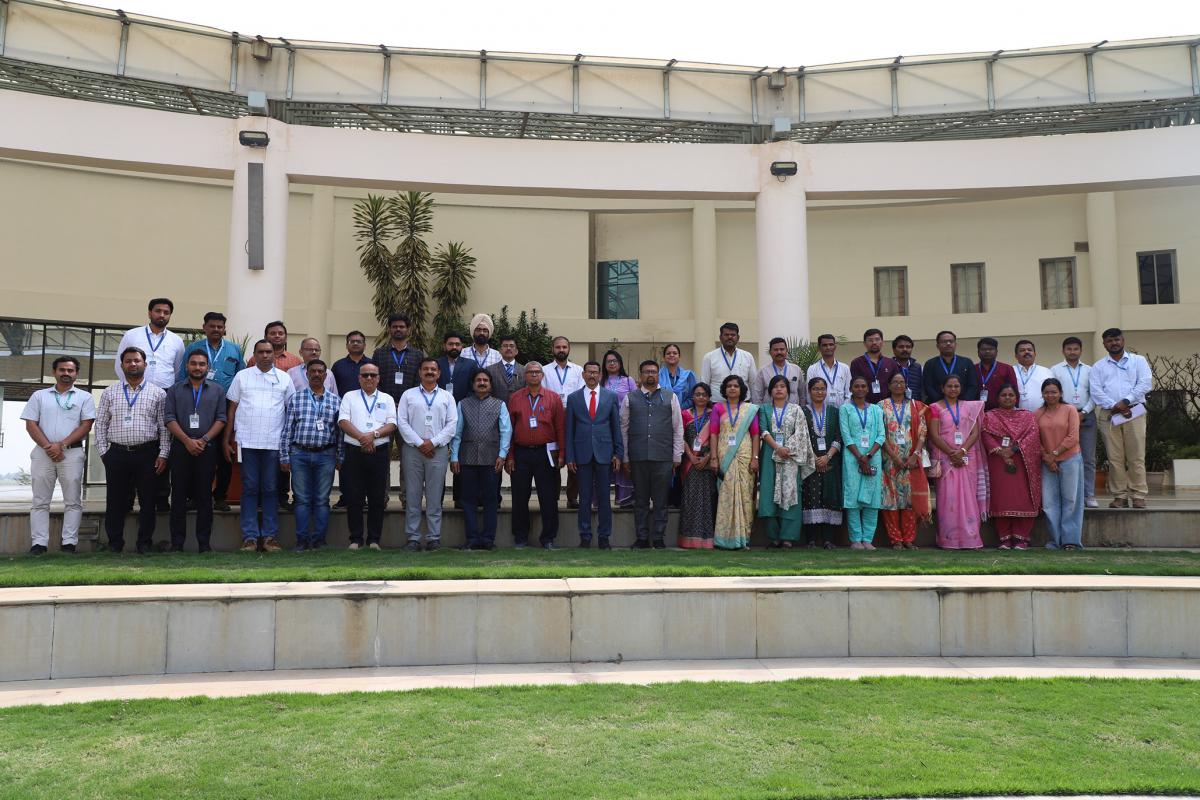
A total of 25 Professors, Scientists, and Subject Matter Specialists (SMS) from 13 statesOdisha, Andhra Pradesh, Karnataka, Meghalaya, Jammu & Kashmir, Maharashtra, Haryana, Uttar Pradesh, Goa, Rajasthan, Gujarat, and Punjab are participating in the training programme. The Winter School aims to bridge knowledge gaps, enhance technical competencies, and promote adoption-ready crop-, animal-, and engineering-based interventions for effective management of abiotic stresses across diverse agro-ecological conditions.