ICAR-NIASM, Baramati successfully organized a training programme on “Climate-Resilient Fodder Systems for Drought and Heat-Stressed Farmers” on 28th April 2026 under the NABARD-WDF supported project in Beed district (Marathwada region). The programme aimed to strengthen farmers’ capacity to adopt sustainable fodder production systems under drought and heat stress conditions.
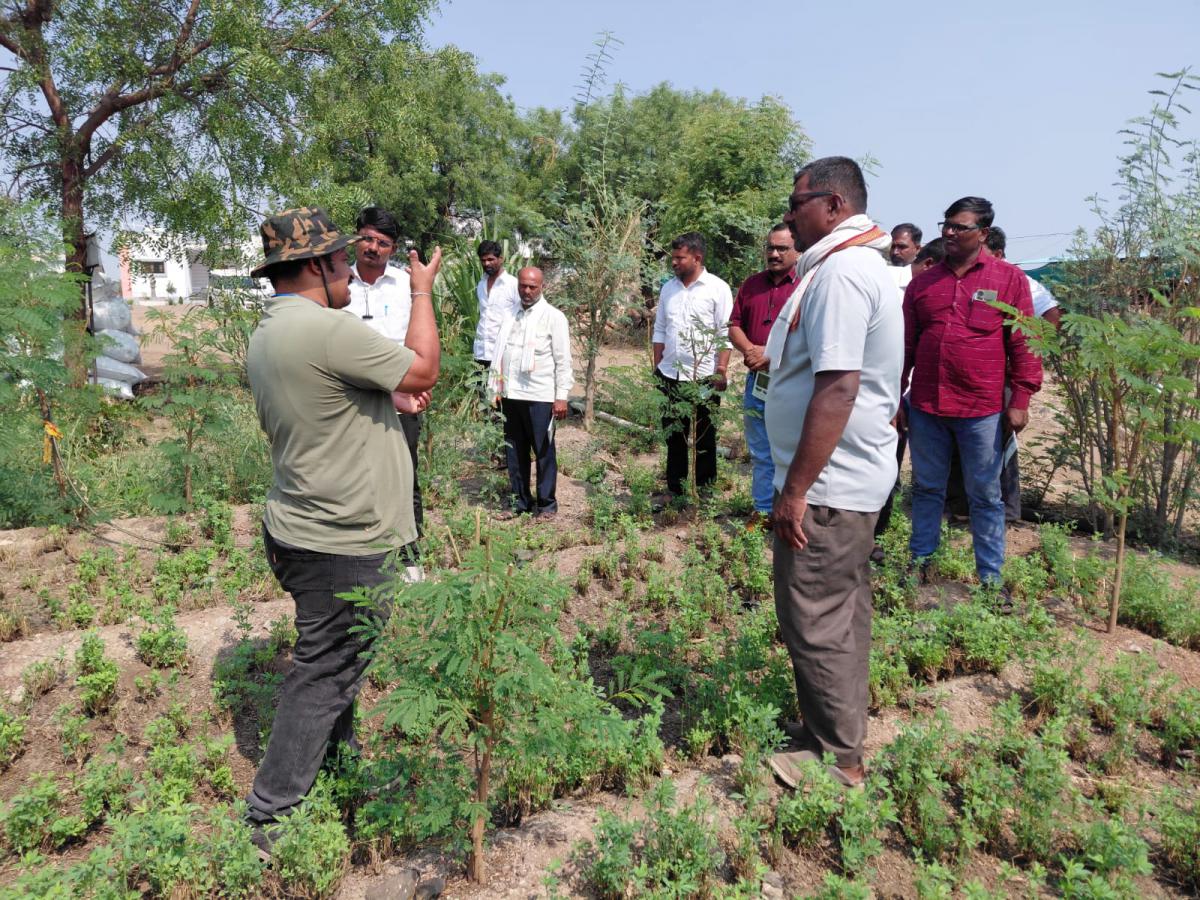
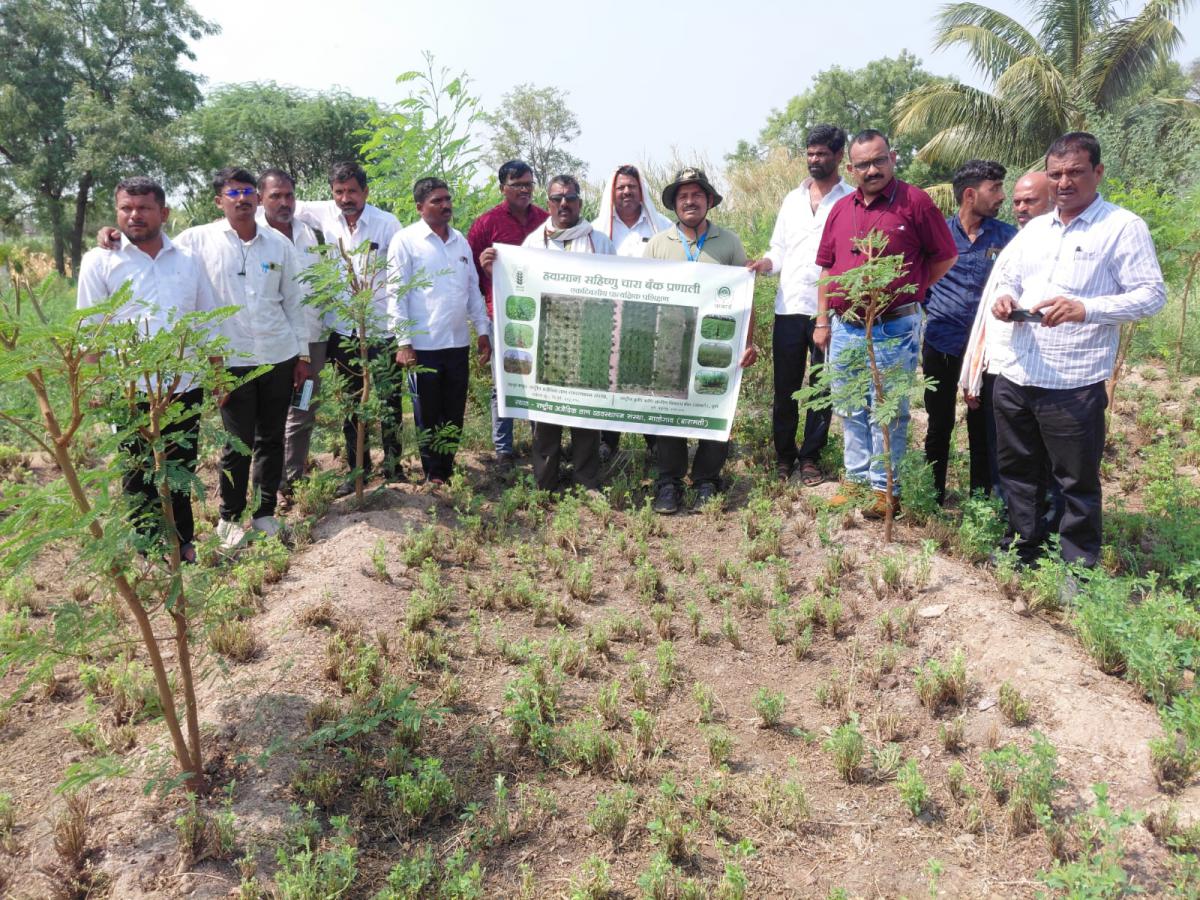
The field exposure was conducted at Lokhandawadi (Tal. Ashti, Dist. Beed), where participating farmers visited progressive farmers’ fields including Shri Sampat Gawade (Karha Waghaj), Shri Yogesh Khomane (Jalgaon Supe), and Smt. Aswini Gawade. The silvipasture model (Leucaena + Lucerne + grasses) demonstrated at Shri Gawade’s field highlighted how farmers in low rainfall regions (~580 mm) are able to produce protein-rich fodder and reduce dependence on concentrated feed. Farmers shared that fodder availability has improved significantly, ensuring better livestock health and reduced input costs.
At the field of Shri Yogesh Khomane, participants observed a multi-tier fodder system integrated with goats and poultry. The model demonstrated how diversified farming systems supported by home-grown fodder can enhance farm income and reduce reliance on external inputs. Similarly, the boundary plantation model at Smt. Aswini Gawade’s farm showcased efficient utilization of field boundaries for continuous fodder supply, even under limited irrigation.
The programme was led by Dr. Sangram B. Chavan, Principal Investigator (PI) of the NABARD Fodder Project, who explained the scientific basis, need, and long-term vision of developing climate-resilient fodder systems in drought-prone regions. Technical guidance during the demonstration was provided by Mr. Vikram Gawade, Young Professional (YP), who elaborated on planting techniques, maintenance practices, and harvesting schedules. Participants also observed goat feeding trials, which clearly demonstrated the positive impact of quality fodder on livestock growth and productivity.
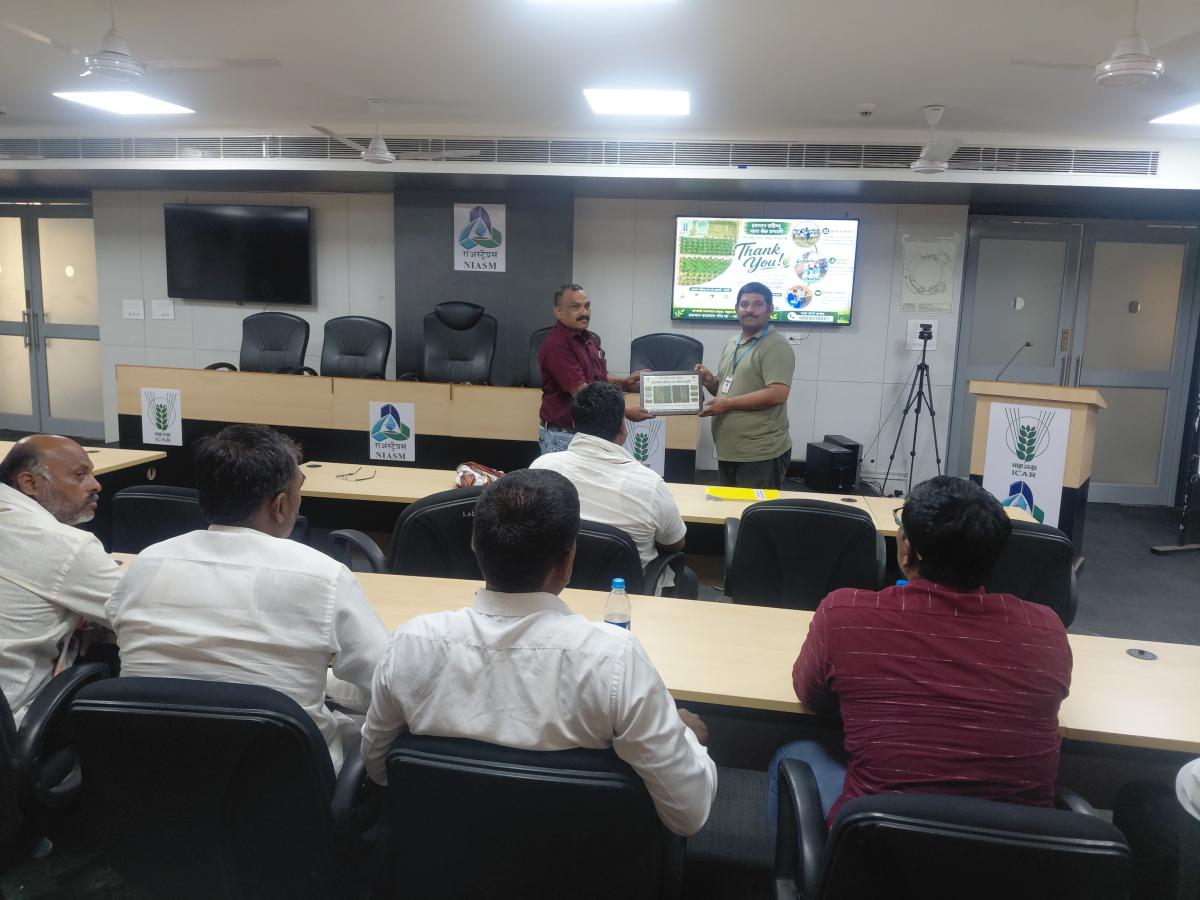
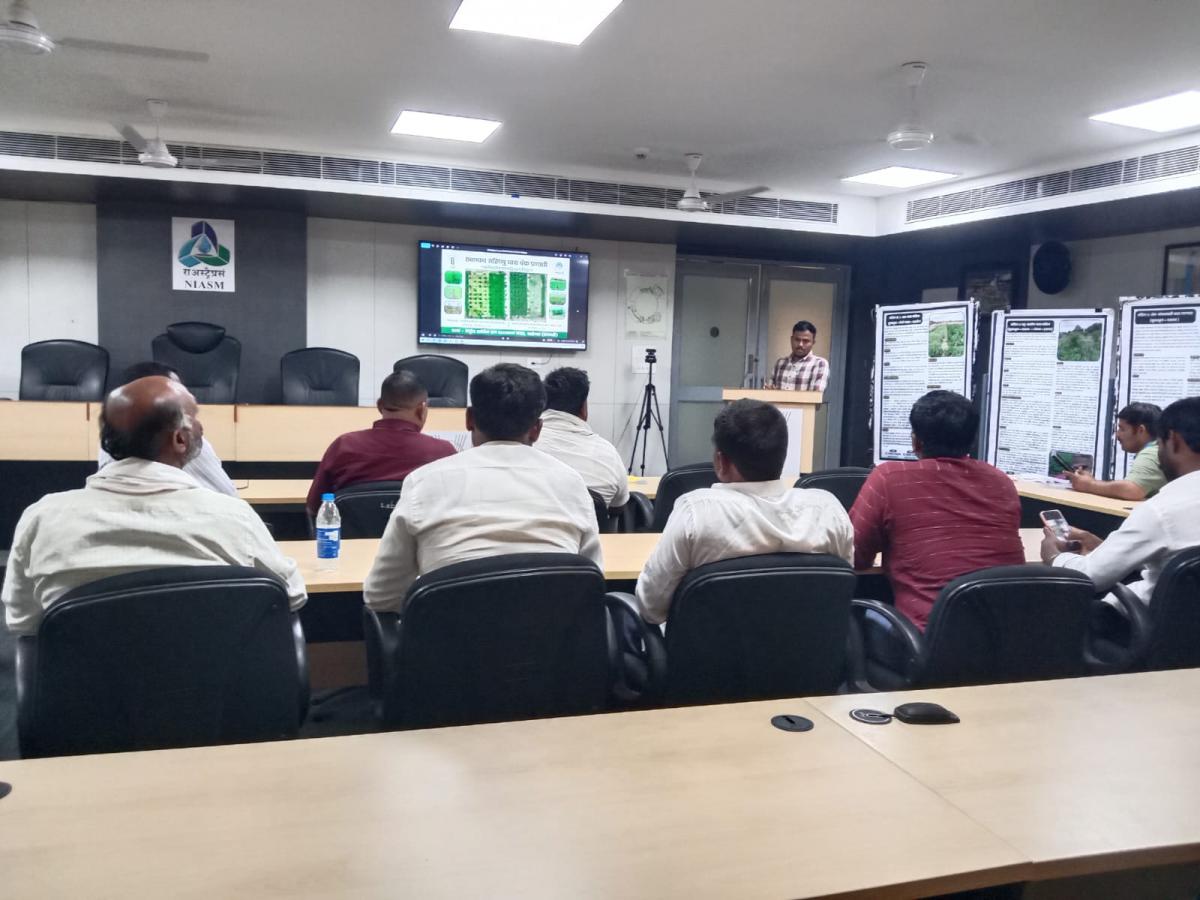
The programme concluded at ICAR-NIASM, Baramati with an interactive session and technical presentations, where farmers appreciated the role of integrated fodder systems, particularly the importance of Leucaena in improving soil health, microclimate, and overall system sustainability. Farmers expressed satisfaction with the practical learning and showed interest in adopting these models in their own fields.
Overall, the training effectively demonstrated that climate-resilient fodder systems can play a vital role in addressing fodder scarcity, enhancing livestock productivity, and strengthening livelihood resilience in drought and heat-stressed regions like Beed. At the end of the programme, Mr. Rajesh Padagale expressed his gratitude and shared that the training was highly informative and practical, providing valuable insights that farmers can readily apply in their fields for improving fodder availability and livestock productivity.