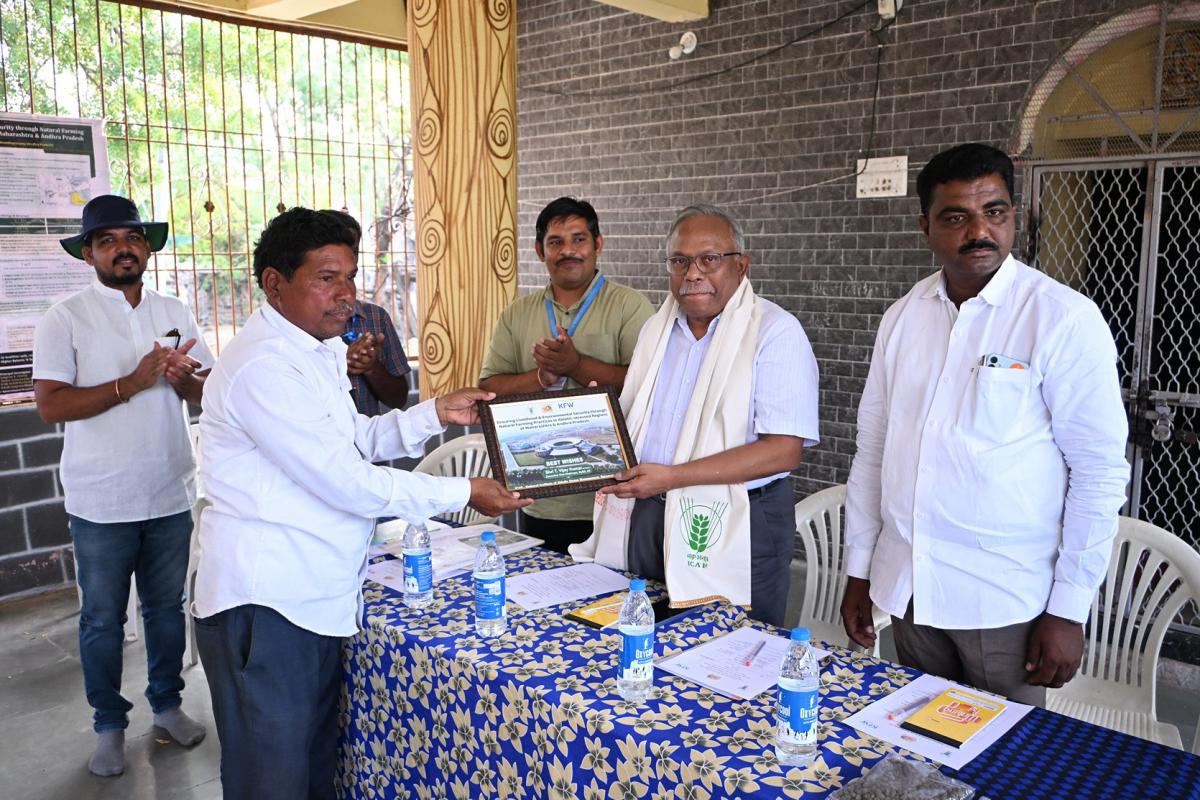
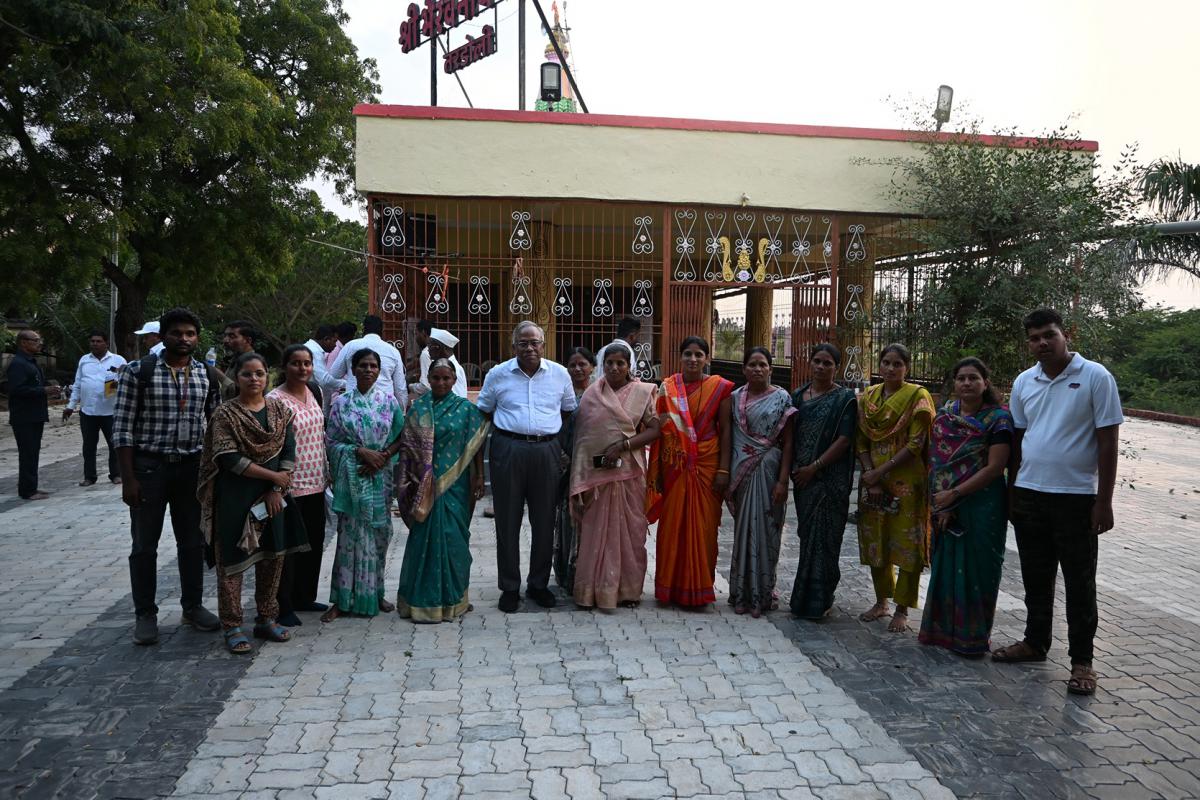
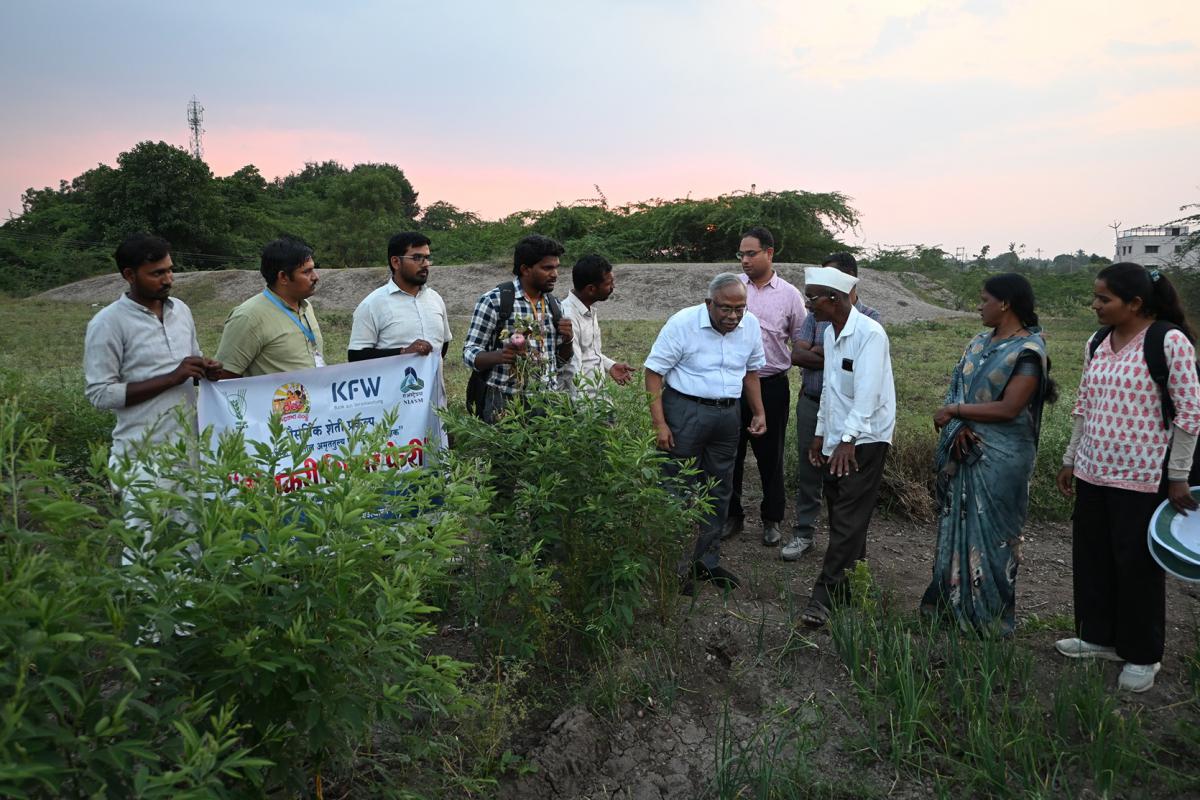
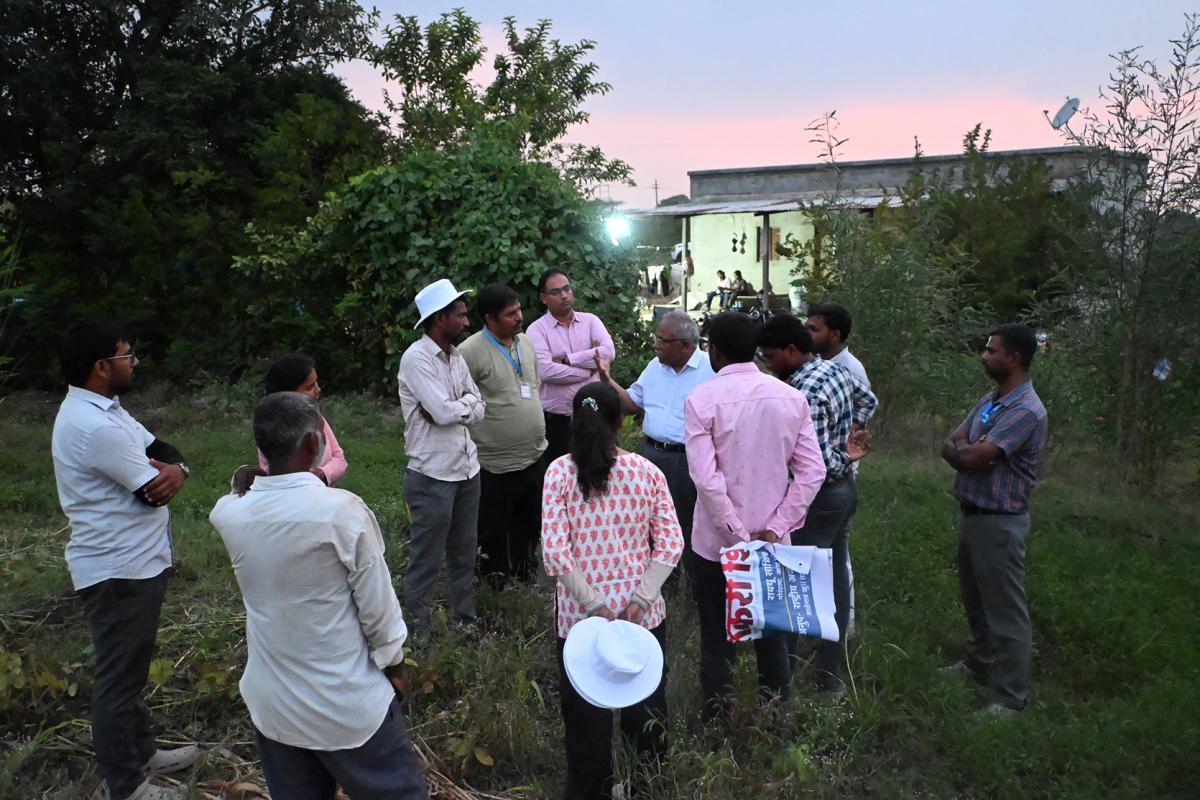
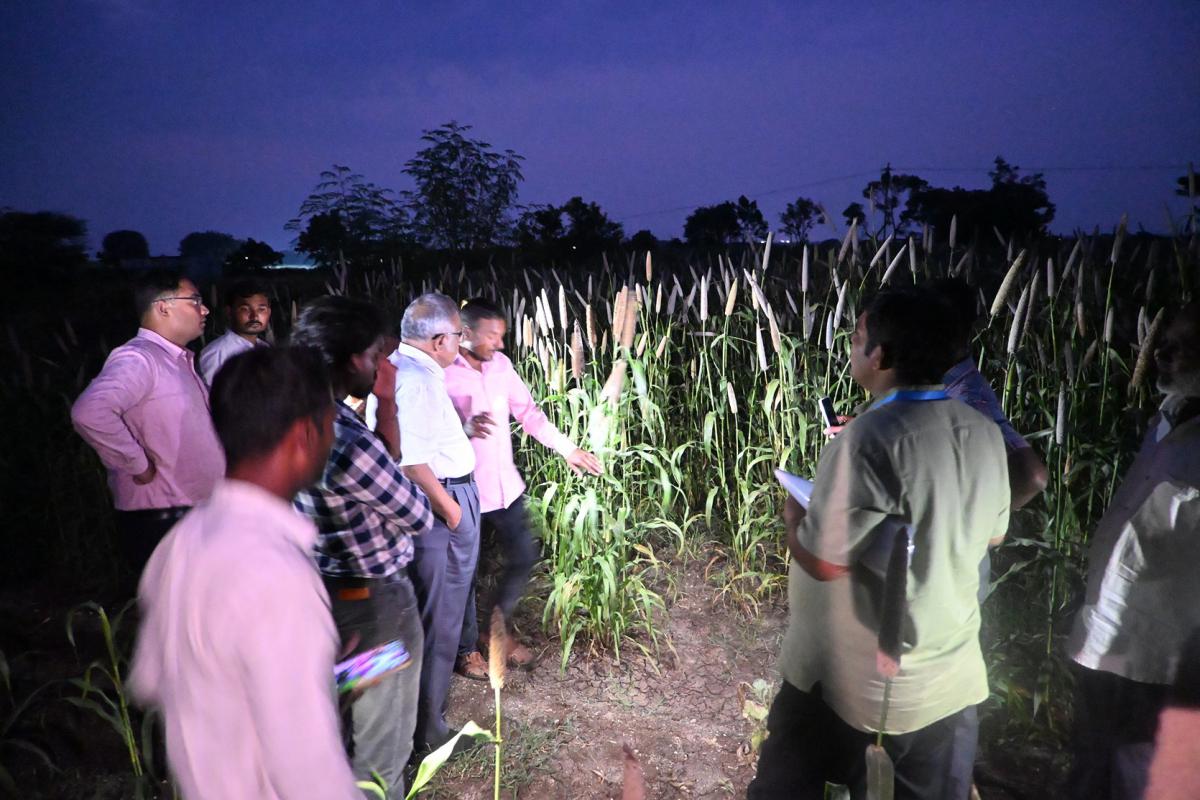
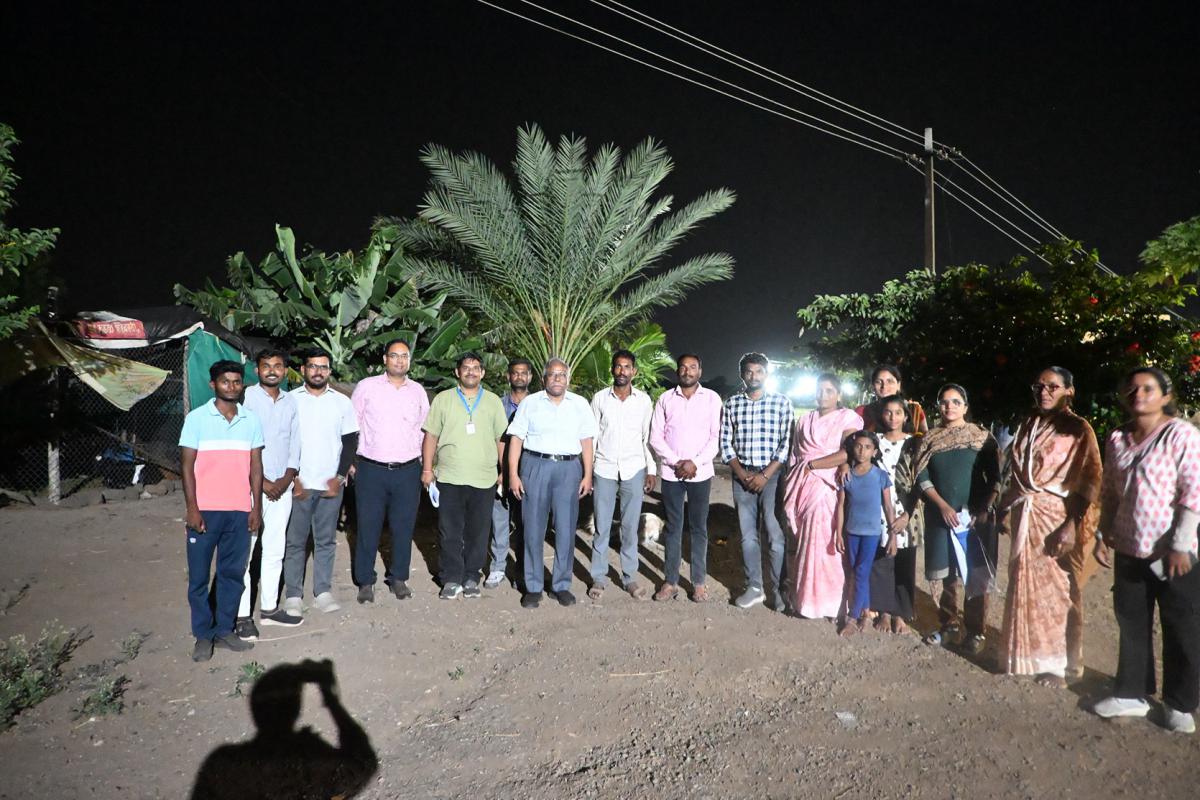
Shri T. Vijay Kumar, IAS (Retd.), Executive Vice-Chairman, Rythu Sadhikara Samstha (RySS), Government of Andhra Pradesh, visited the Natural Farming project fields at Tardoli, Baramati, on 5 October 2026 under the project “Ensuring Livelihood & Environmental Security through Natural Farming Practices in Abiotic-stressed Regions of Maharashtra & Andhra Pradesh.”
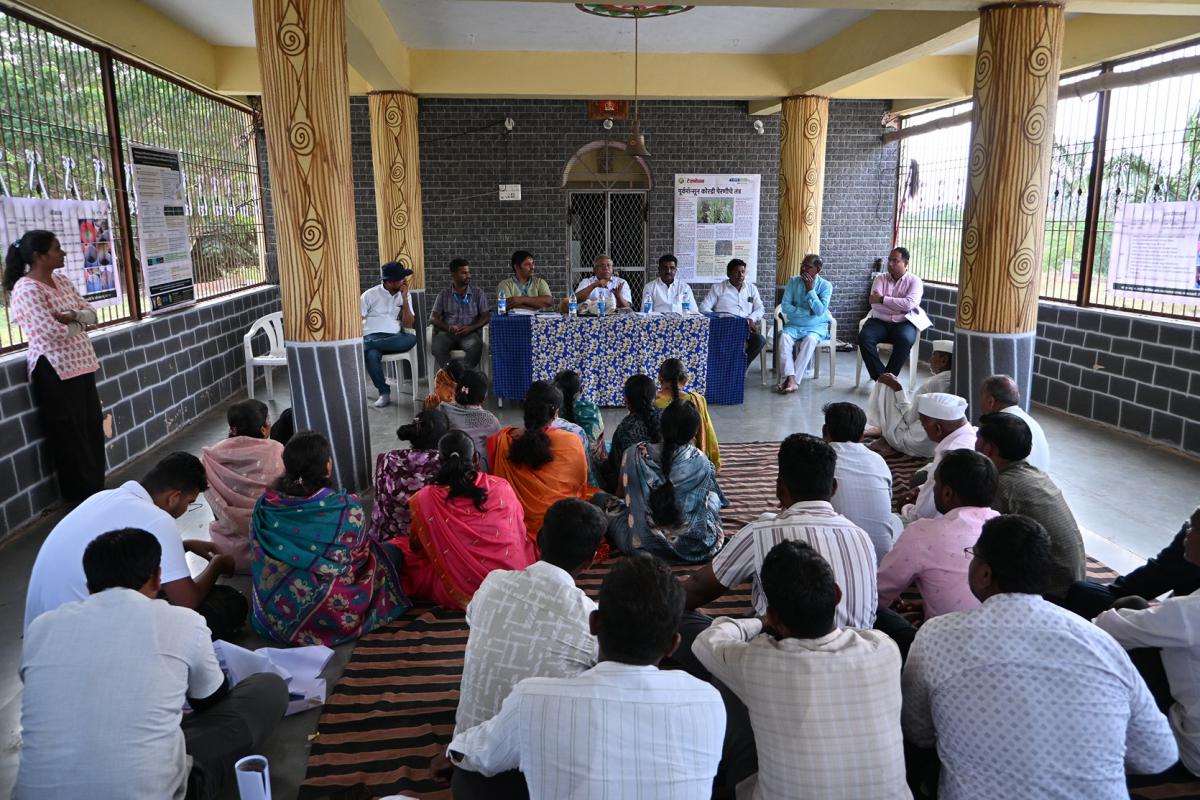
The Field Day-cum-Field Visit brought together farmers from the project villages of Jalgaon, Supe and Tardoli, along with the Sarpanch of Tardoli and other local farmers. Shri Vijay Kumar visited the fields of farmers and interacted directly with farmers on their experiences with Natural Farming.
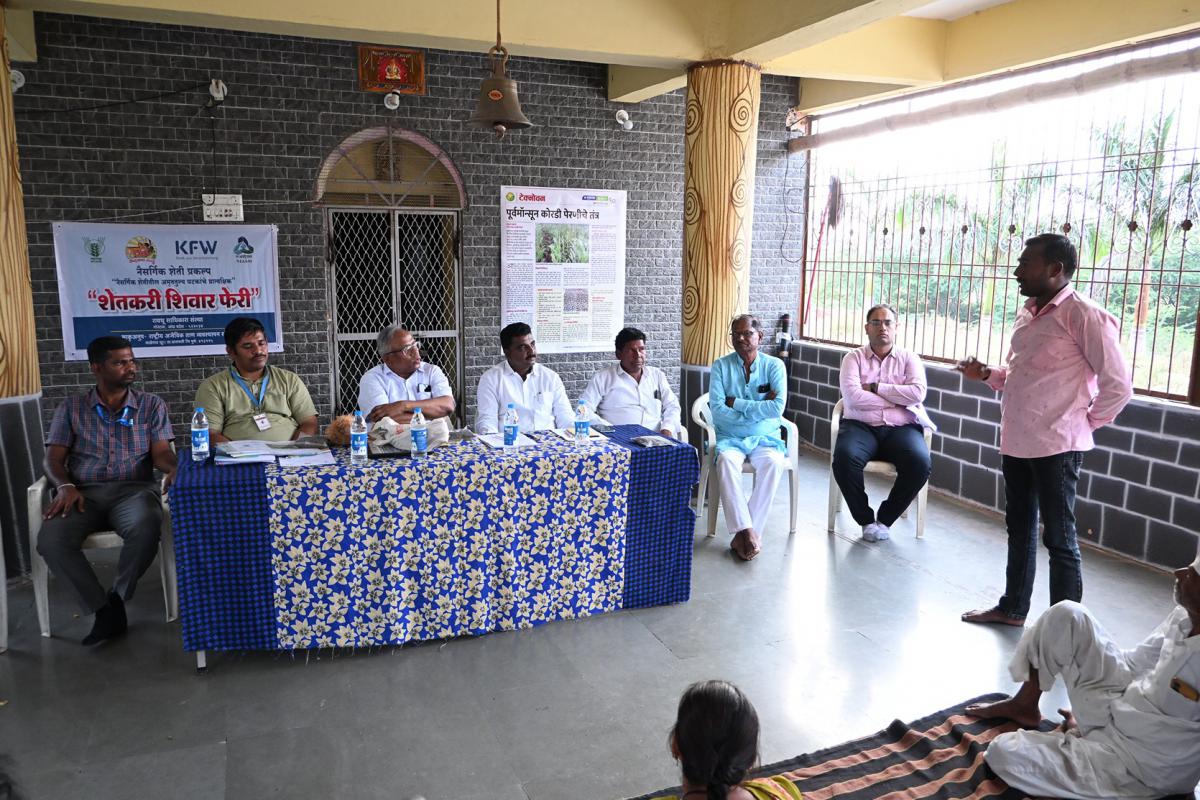
During the interaction held at Bhairavnath Temple, Tardoli, Dr. Sangram B. Chavan, Project Principal Investigator, presented an overview of the village farming situation, Natural Farming protocols being followed and field-level performance compared with conventional farming. Project photographs and field observations were also shared.
Farmers highlighted several practical benefits of Natural Farming. Shri Ganesh Tambe, a young farmer from Tardoli, shared that after adopting Natural Farming for the last three crops, he observed improvements in crop health, tillering and intercrop performance. He also highlighted the importance of year-round soil cover and Desmanthus on field bunds as a source of green, protein-rich fodder. Shri Sunil Jagtap from Jalgaon-Supe shared that despite receiving only around 220 mm rainfall, his rainfed bajra under Natural Farming showed better tillering and greenness, while pest incidence was reduced following the use of Neemastra. He also reported additional income from intercrops such as green gram and rajma.
Other farmers, including Shri Dnyaneshwar Bhosale, Smt. Swati Khomane, Shri Pawar and Shri Atish Bhapkar, shared experiences related to relay cropping, chickpea and sunflower performance, reclamation of fallow land, and crop production under saline irrigation water.
Shri T. Vijay Kumar shared the experience of Andhra Pradesh, where Natural Farming experimentation began with a small group of farmers and was subsequently scaled through field experimentation, scientific validation and development of suitable packages and practices. He emphasized approaches such as pre-monsoon dry sowing, mixed cropping and seed pelleting, which have supported Natural Farming under challenging climatic conditions. He further shared that the Natural Farming movement in Andhra Pradesh has now reached nearly 18 lakh farmers, demonstrating the potential for large-scale adoption through sustained field-level efforts and farmer participation.
Following the field visits and farmer interaction, Shri Vijay Kumar appreciated the visible field-level impact and implementation of the project. He suggested expanding the initiative beyond the existing participating farmers with the objective of making Tardoli a Natural Farming village. He also highlighted the potential role of ICAR–NIASM as a technical and scientific partner in discussions with the Agriculture Department of Maharashtra for wider scaling of Natural Farming.
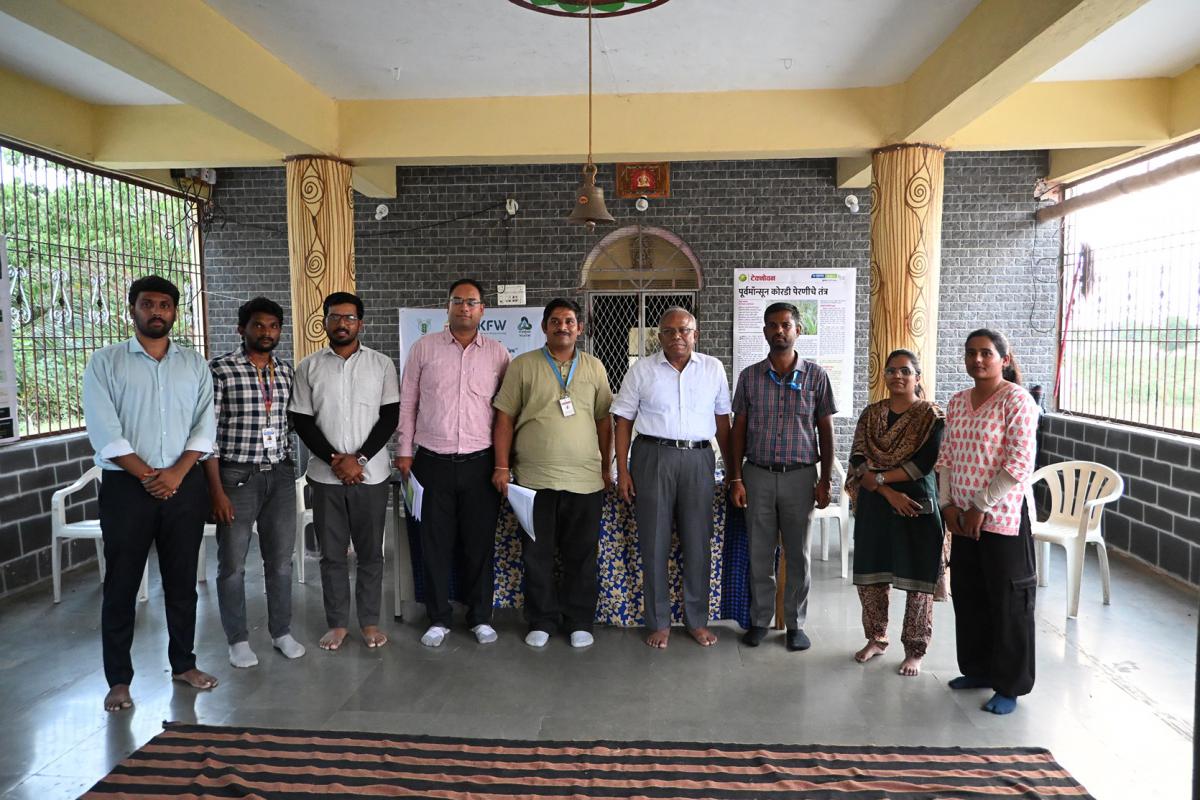
For effective implementation of the project, two External Community Resource Persons (Sh Murari in Tardoli & Sh Shiva in Jalgaon Supe) from Andhra Pradesh are stationed in the project villages to guide farmers in preparation and use of Natural Farming inputs, kitchen garden models and other project activities. The field programme is further supported by three Young Research Fellows—Dr. Gauri Rawale, Dhanashree Nevase and Ganesh Mohite, who facilitate farmer training, demonstrations, field monitoring and documentation.
Dr. A. S. Morade, Dr. C. B. Harisha, Dr. V. D. Kakde and members of the ICAR–NIASM Natural Farming Project Team participated in the programme.
The visit provided an important platform for farmer-to-farmer learning and exchange of Natural Farming experiences between Maharashtra and Andhra Pradesh, particularly on building climate resilience, improving crop performance and strengthening diversified farm-based livelihoods.