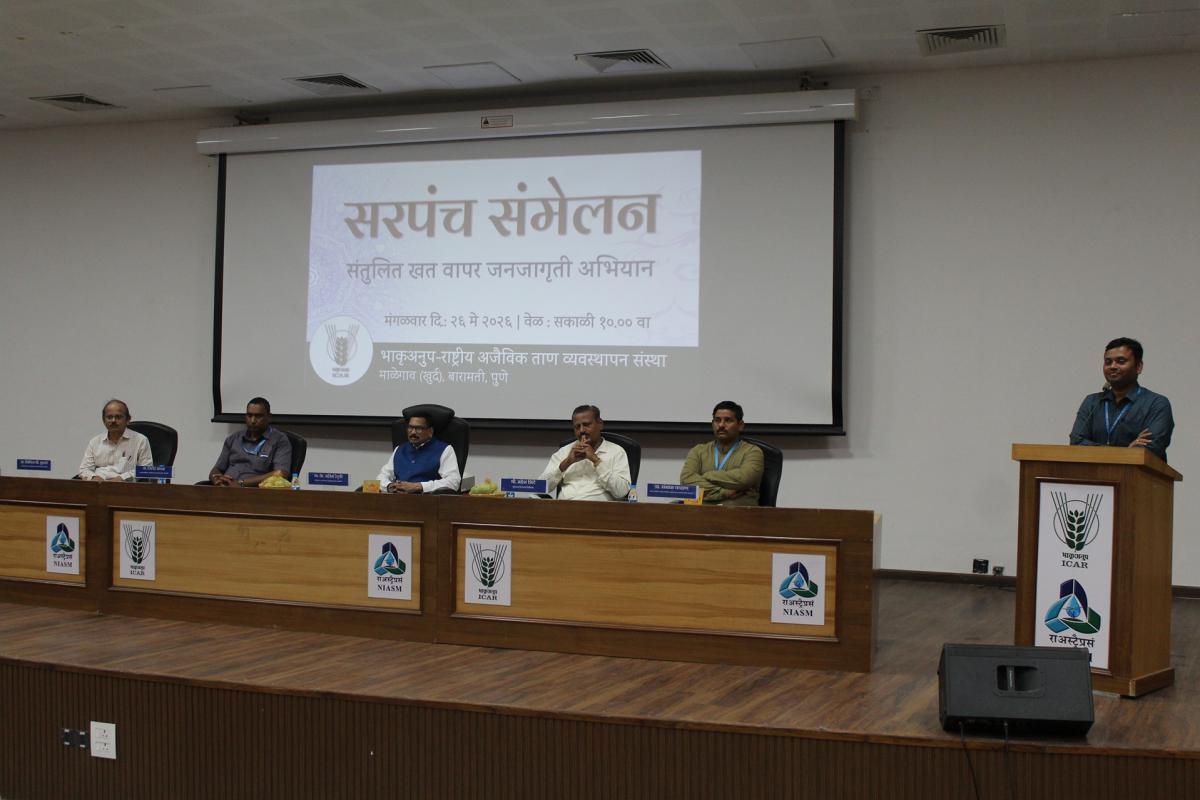
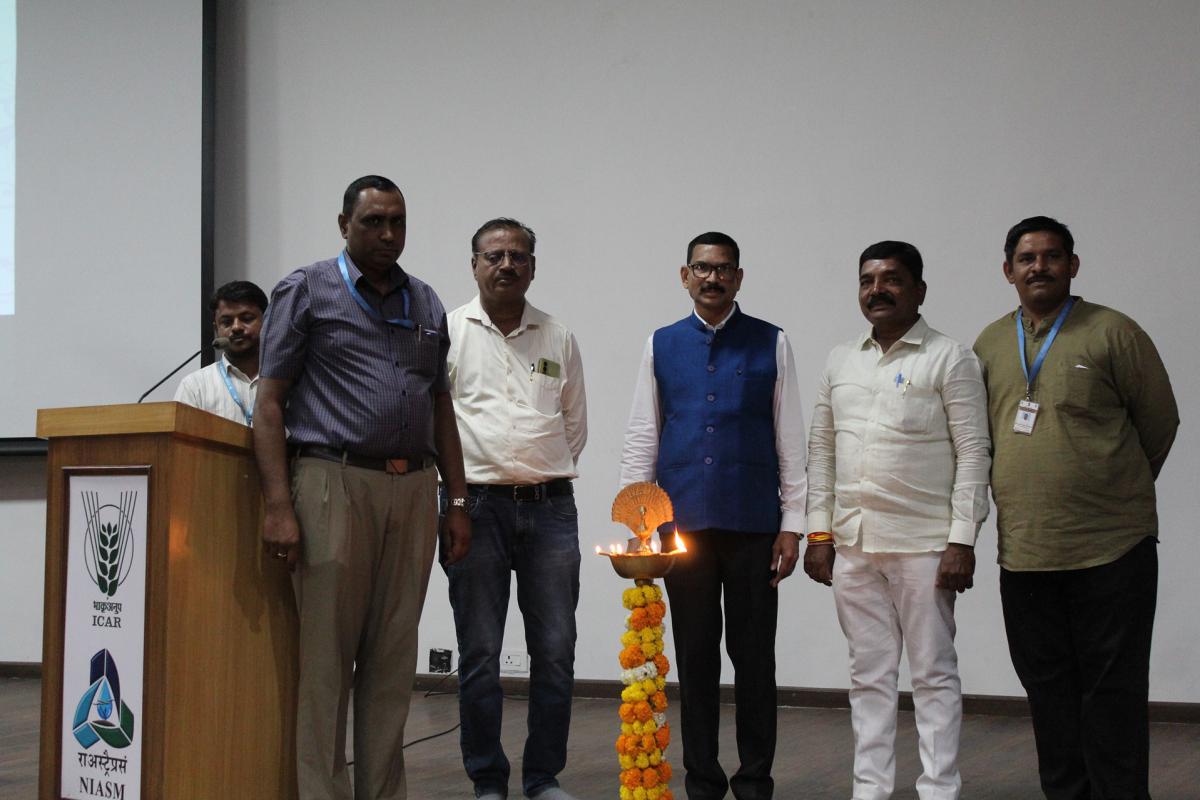
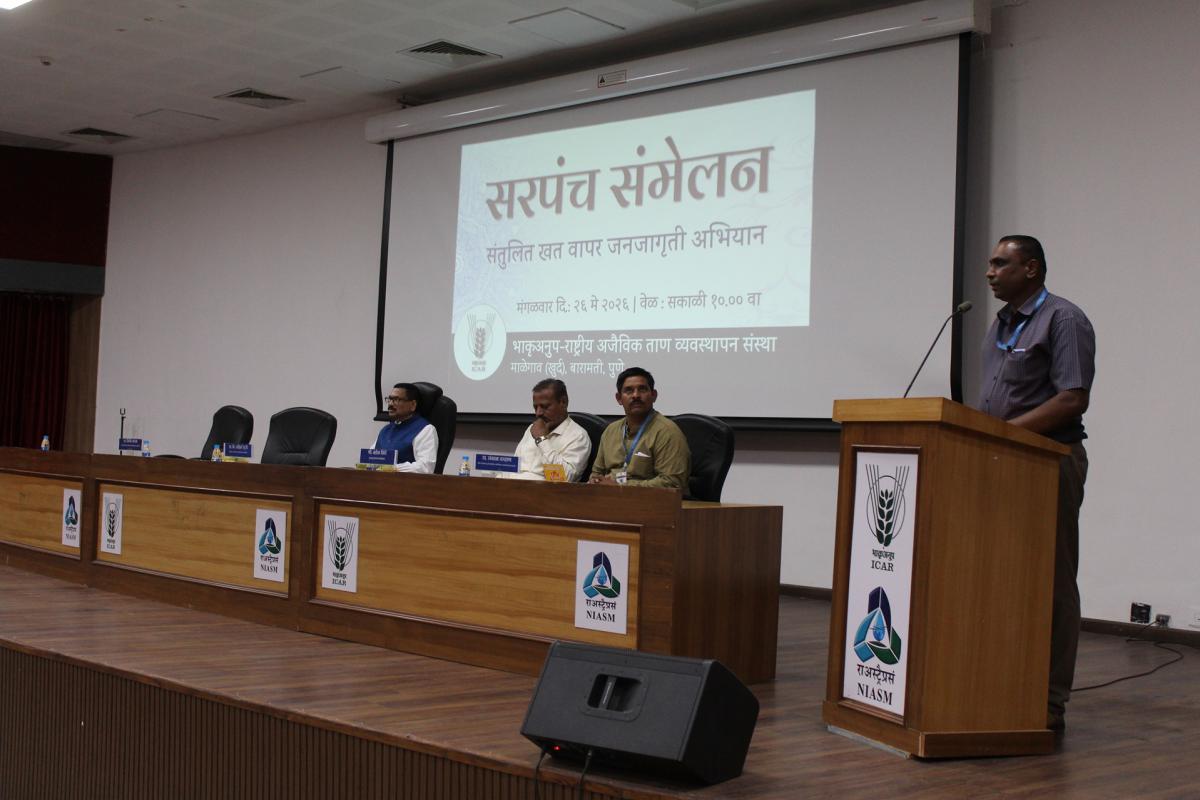
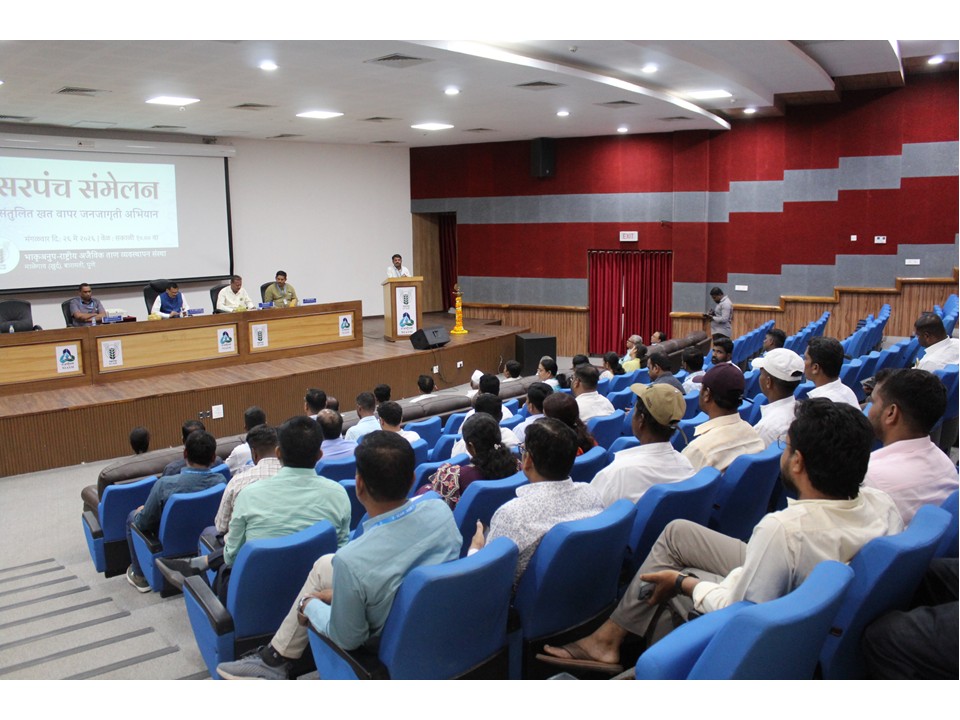
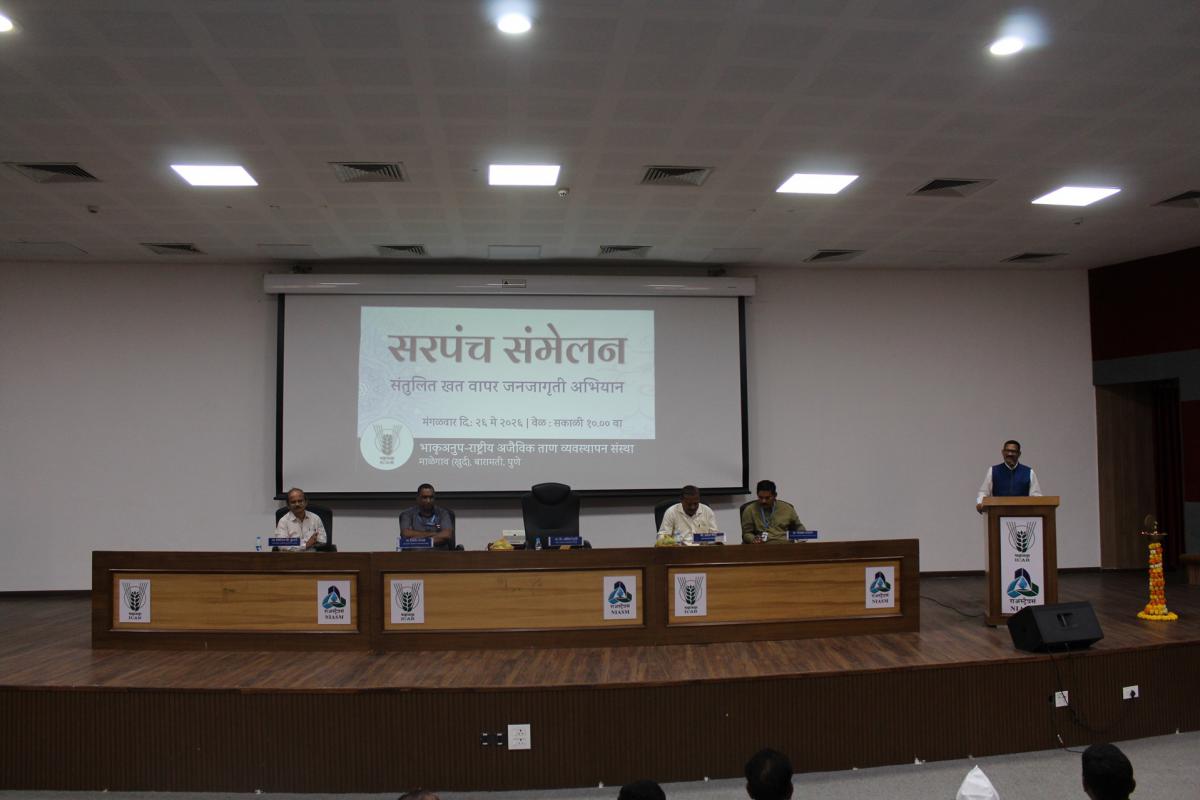
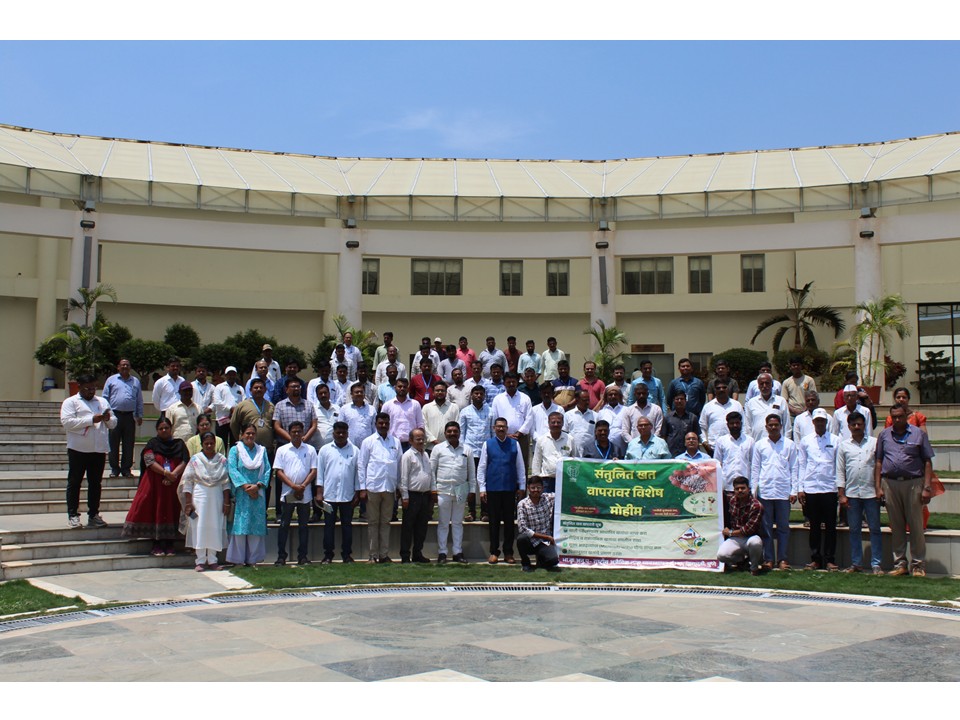
A “Sarpanch Sammelan on Balanced Use of Fertilizers” was organized on 26 May 2026 at the Sardar Vallabhbhai Patel Auditorium of ICAR-National Institute of Abiotic Stress Management (NIASM), Baramati, Pune. The programme was conducted as part of the nationwide intensive campaign on balanced and science-based nutrient management.
The programme witnessed enthusiastic participation from around 90 sarpanches, former sarpanches, Gram Panchayat members, officials from the Agriculture Department, and progressive farmers from nearby villages. In addition, nearly 70 staff members of ICAR-NIASM, including scientists, contractual staff, administrative personnel, and finance staff, attended the event.
The function was anchored by Dr. Ravikumar. Dr. K. Sammi Reddy, Director, ICAR-NIASM,chaired the programme, while Shri Mahesh Shinde, Quality Control Inspector from the Agriculture Department, attended as the Guest of Honour.
Dr. Jitendra H. Kadam, Principal Scientist and Nodal Officer of the Balanced Use of Fertilizers campaign, delivered the introductory address and provided an overview of the intensive campaign and objectives of the Sarpanch Sammelan. He highlighted the historical use of fertilizers in Indian agriculture and explained how excessive and imbalanced fertilizer application, adopted in pursuit of higher productivity, has adversely affected soil health and long-term sustainability. He also discussed possible solutions for restoring soil fertility and promoting balanced nutrient management.
This was followed by an expert lecture by Dr. Nintu Mandal, Senior Scientist (Soil Science), who emphasized the importance of Soil Health Cards and explained how farmers can effectively utilize them for scientific fertilizer application. He stressed that balanced fertilizer use based on soil testing can improve productivity while maintaining soil health.
An interactive session between the sarpanches and scientists was later organized, during which participants shared the major agricultural challenges faced in their villages. Several sarpanches highlighted issues such as drought conditions, saline irrigation water, saline-alkaline soils, and increasing dependence on chemical fertilizers. Many participants requested ICAR-NIASM to organize similar awareness programmes in their villages and expressed keen interest in natural farming practices.
Addressing the gathering, Shri Mahesh Shinde from the Maharashtra Agriculture Department advised farmers to follow scientific crop planning based on rainfall conditions. He cautioned farmers against sowing crops without receiving at least 100 mm rainfall and encouraged the adoption of crop rotation, especially inclusion of pulses, to reduce fertilizer requirements and improve soil fertility. He also guided farmers regarding precautions and best practices while purchasing seeds.
In his presidential address, Dr. K. Sammi Reddy emphasized that all 17 essential nutrients are important for plant growth and that imbalance in any nutrient can lead to significant yield reduction. He advised farmers to adopt five key practices for sustainable agriculture: incorporation of green manuring, balanced fertilizer application based on Soil Health Cards, crop rotation to reduce nitrogen demand, use of biofertilizers such as Rhizobium, PSB, and Trichoderma to reduce chemical fertilizer requirement by at least 25 percent, and promotion of natural farming practices through Jeevamrut, Ghan Jeevamrut, and mulching. He further assured farmers that ICAR-NIASM scientists are always available for field guidance, demonstrations, and technical support whenever required.
During the vote of thanks, Dr. Sangram Chavan, Senior Scientist and co-organizer of the event, informed the gathering about two ongoing projects being implemented by ICAR-NIASM in 4–6 villages of the rainfed region of Morgaon. These projects focus on perennial fodder systems for year-round green fodder availability and promotion of natural farming practices. He mentioned that around 150 farmers are directly benefiting from these initiatives. He extended sincere gratitude to all dignitaries, participants, sarpanches, and officials for their active participation and support in making the programme successful.
The programme concluded with the National Anthem followed by a field visit and demonstration session for the participants.